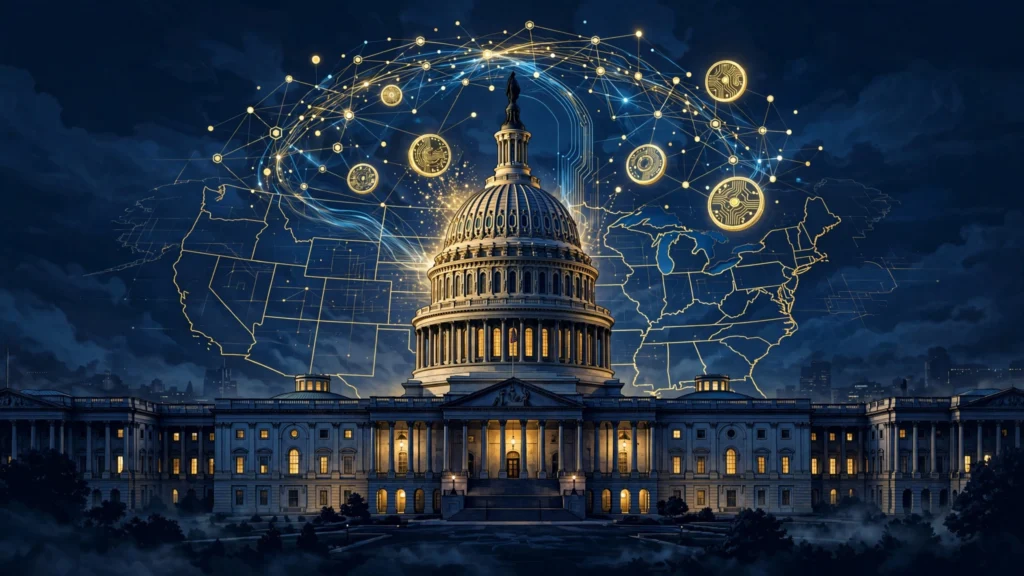
Crypto Midterm Results 2026: Who Writes the Rules Next
When the votes from November 3 were counted, the political map for cryptocurrency in Washington had changed more in a single night than it had in years. Democrats had taken both the House and the Senate, and two of the industry’s best-known critics were lined up to control the committees that matter most for crypto. The crypto midterm results 2026 mark a turning point, not because any single law changed overnight, but because the people who will decide which laws get written, which hearings get held, and which companies get investigated are about to change. From January 2027, the industry will be dealing with a very different Congress, and the clock on its top legislative priority is already running down.
What the November 3 results changed
The headline result is straightforward: Democrats won control of both chambers of Congress in the midterm elections held on November 3, 2026. Control matters enormously for crypto because every bill, hearing, and investigation runs through committees, and the majority party chooses who chairs them. A chair decides which bills receive hearings, which witnesses are called, which investigations are opened, and whether legislation ever reaches a vote. That power is why the crypto midterm results 2026 are being read so closely by exchanges, stablecoin issuers, and token projects. In the Senate, jurisdiction is split between the Banking Committee, covering securities law, exchanges, and stablecoins, and the Agriculture Committee, which oversees the Commodity Futures Trading Commission, the regulator that polices crypto commodities. Both are set to come under new leadership in January, and both expected chairs have long records of scepticism toward the industry.
Elizabeth Warren and the Senate Banking Committee
The most consequential name in the new power map is Elizabeth Warren, the Democratic senator from Massachusetts, who is expected to chair the Senate Banking Committee from January 2027. The Banking Committee is the single most important committee for crypto in the Senate, because its remit covers bills on exchanges, securities law, and stablecoins. Warren has been one of the industry’s most persistent critics, arguing that digital assets need far tougher oversight and that the risks they pose to consumers and the financial system have been underestimated. That does not mean legislation stops entirely, but it changes the terms of the debate. Under Warren, the committee is far more likely to focus on consumer protection, enforcement, and the risks of fraud and illicit finance than on the industry’s wish list of lighter registration requirements. Bills the industry supports may face tougher conditions and stronger safeguards before they advance.
Sherrod Brown and oversight of the CFTC
The second half of the power map is Sherrod Brown, the Democratic senator from Ohio, who is likely to chair the Senate Agriculture Committee. That committee matters because it oversees the Commodity Futures Trading Commission, the agency that polices crypto commodities, including Bitcoin and other tokens treated as commodities rather than securities. If a token is a commodity, it falls under the CFTC’s authority, and the committee that oversees the CFTC sets the tone for how aggressively that authority is used. Brown, like Warren, has a long record of scepticism toward the crypto industry, and his likely chairmanship signals that the CFTC will face closer scrutiny from Capitol Hill. A committee that wants the CFTC to be tougher may push the agency to bring more enforcement cases and police spot markets more aggressively. For the industry, the message is plain: the two Senate committees with the most power over digital assets will both be led by critics.
What stayed the same: the agencies
While Congress is about to change hands, the leadership of the agencies that regulate crypto day to day is unchanged. SEC Chair Paul Atkins remains in place, as does CFTC Chair Michael Selig, and Jonathan Gould continues to lead the Office of the Comptroller of the Currency, the regulator that supervises national banks. This continuity matters because the agencies, not Congress, write the detailed rules firms must follow, bring enforcement actions, and approve or reject applications to operate. But Congress also controls agency budgets, confirms agency leaders, and can pass laws that override their rules. A Banking Committee chaired by Elizabeth Warren can haul agency heads before it for hearings, demand documents, and challenge decisions it disagrees with. The agencies may be unchanged, but the political pressure on them is about to increase sharply.
The CLARITY Act: one vote short and a deadline
The clearest casualty of the new political landscape may be the CLARITY Act, the market structure bill that has been the crypto industry’s top priority. The bill sets out which tokens count as securities, regulated by the SEC, and which count as commodities, regulated by the CFTC, and establishes how exchanges must register to operate legally. That distinction is the central unresolved question in American crypto regulation, and the CLARITY Act was designed to answer it. The bill’s path has already hit a wall: on September 15, 2026, the Senate voted 49 to 50 to advance it, short of the 60 votes needed. Bills that do not pass expire when the current Congress ends on January 3, 2027, so the CLARITY Act has only the lame-duck session to find a way through. If it fails, the whole effort starts again from scratch in a new Congress, under committee chairs far less sympathetic to the industry’s goals.
The Blumenthal letters and the subpoena warning
While the legislative outlook darkens, the oversight outlook has sharpened. On November 5, Senator Blumenthal’s office sent letters to World Liberty Financial, the Trump family-linked crypto company, the company behind the $TRUMP memecoin, Binance, Tether, and several donors to the White House ballroom project, including Coinbase CEO Brian Armstrong and the Winklevoss twins. The letters asked for responses by November 30, 2026, and warned that if records were not produced by January 4, 2027, the subcommittee would consider “alternative measures,” which can include subpoenas once Democrats hold the gavel. The choice of recipients is itself a message. World Liberty Financial and the $TRUMP memecoin sit at the intersection of crypto and the Trump family’s business interests, while Binance and Tether are two of the largest companies in the global crypto market. Subpoenas are the sharpest tool a committee possesses, and the warning signals the new majority intends to use its oversight powers aggressively from the start.
The lame-duck window: now to January 3
Between now and January 3, 2027, Congress enters its lame-duck session, the final weeks of the current Congress, and this is the CLARITY Act’s last window. Lame-duck sessions are unpredictable: outgoing members have less to lose, deals that seemed impossible can suddenly become possible, and bills can be attached to larger packages that must pass before the session ends. Supporters of the CLARITY Act will look for any vehicle that can carry it through, whether as a standalone vote, an amendment, or part of a broader end-of-year package. The calendar facing the industry is brutally simple. November 30, 2026 is the deadline for responses to the Blumenthal letters. From now to January 3, 2027, the lame-duck session offers the CLARITY Act its last window. On January 3, 2027, the new Congress is sworn in and the CLARITY Act expires. On January 4, 2027, the records deadline passes, and the subcommittee can begin considering “alternative measures.”
What it means for exchanges, stablecoins and token projects
For the businesses that make up the crypto market, the new power map has practical consequences beyond politics. Exchanges waiting for the CLARITY Act to tell them how to register must now plan for a world in which that clarity does not arrive, at least not soon. Stablecoin issuers, whose business depends on the rules governing reserves and redemption, will face a Banking Committee that wants stronger safeguards. Token projects weighing whether to launch in the United States must reckon with a Senate more likely to treat their tokens as securities and demand registration. None of this means the industry is finished in America, but the regulatory environment is about to become tougher, slower, and more adversarial. The industry will need to build relationships with the new committee leaders, even those who have been its critics, and make the case for sensible regulation in terms that resonate with lawmakers focused on consumer protection and financial stability.
Frequently asked questions
Who will chair the Senate Banking Committee from January 2027?
Elizabeth Warren is expected to chair it. The committee covers bills on exchanges, securities law, and stablecoins.
Who is likely to chair the Senate Agriculture Committee?
Sherrod Brown is likely to chair the Senate Agriculture Committee, which oversees the Commodity Futures Trading Commission, the regulator that polices crypto commodities.
What is the CLARITY Act and why does it matter?
The CLARITY Act is a market structure bill that sets out which tokens count as securities (SEC) and which count as commodities (CFTC), and how exchanges must register. It was the industry’s top legislative priority.
When does the CLARITY Act expire?
Bills that do not pass expire when the current Congress ends on January 3, 2027. The Senate voted 49 to 50 to advance the bill on September 15, 2026, short of the 60 votes needed.
What did the Blumenthal letters demand?
On November 5, letters went to World Liberty Financial, the company behind the $TRUMP memecoin, Binance, Tether, and donors including Brian Armstrong and the Winklevoss twins, asking for responses by November 30, 2026, and warning of “alternative measures,” including subpoenas, if records are not produced by January 4, 2027.
Source: Memeburn
—
—
—
Related reading on MM Crypto Analysis Web
- SEC and CFTC to Push Ahead With Crypto Rules Without Congress
- Banks Ask FinCEN to Bring DeFi Under Bank Secrecy Act Reporting
- Greece Passes Crypto Tax Law With 10 Percent Gains Levy and 15 Percent DeFi Tax
More in Regulation on MM Crypto Analysis Web.

Pingback: FCA Crypto Perimeter Guidance Opens DeFi Debate