Chainlink Brings Data Feeds to Stellar’s $4B RWA Ecosystem
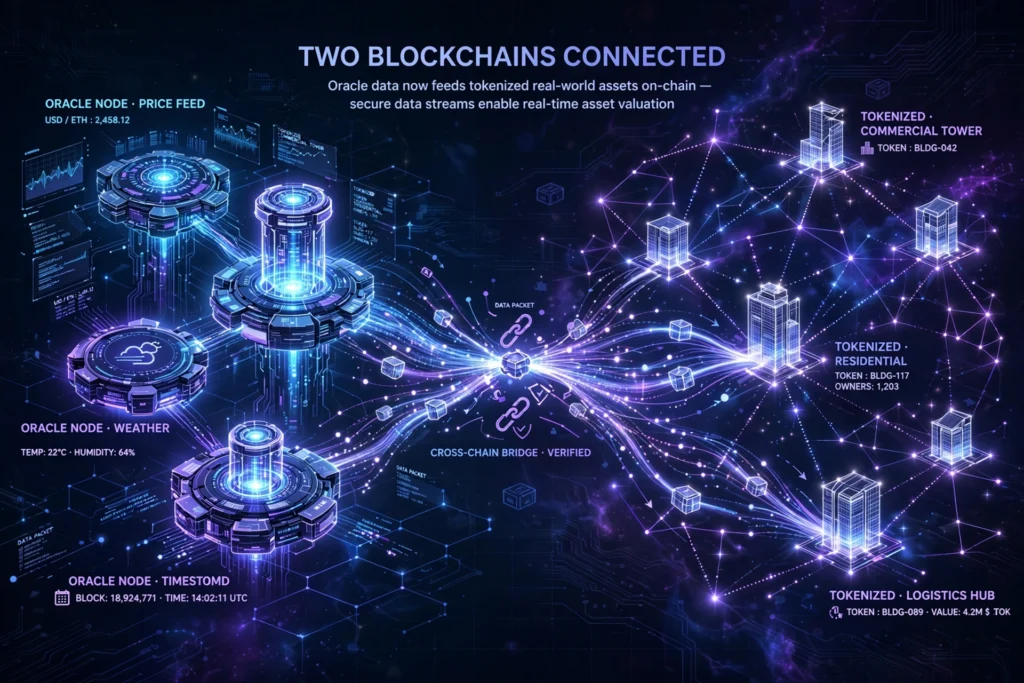
Chainlink’s oracle infrastructure went live on the Stellar network on October 14, with both Data Feeds and Data Streams now available on mainnet — giving developers the reliable price data needed to put Stellar’s fast-growing tokenized asset ecosystem to work.
The commercial structure is notable: the Stellar Development Foundation has taken over the operating costs of running the oracles under the Chainlink Scale program, removing the cost barrier for developers building on the network.
Stellar already hosts more than $4 billion in real-world assets — spanning stablecoins, tokenized treasuries and other on-chain instruments. Until now, much of that value sat relatively idle: issued and owned on-chain, but hard to use inside financial applications. The Chainlink integration changes that by supplying the pricing infrastructure for markets where users can trade tokenized instruments or post them as collateral.
What developers can now build
With dependable data available on-chain, developers can construct the functions that turn static tokenized assets into working capital: accurate pricing, borrowing against holdings, and collateral management. Stablecoins and tokenized equities are among the categories expected to benefit first.
Raja Chakravorti, Chief Business Officer at the Stellar Development Foundation, said institutional-scale on-chain markets require dependable infrastructure for pricing, execution and asset movement — positioning Chainlink’s connectivity services as foundational plumbing rather than a nice-to-have.
The RWA infrastructure race
The announcement lands in the middle of a land grab to become the default infrastructure layer for tokenized real-world assets. Chainlink’s pitch is its track record: the network claims to have enabled tens of trillions of dollars in on-chain transaction value across DeFi.
Stellar’s angle is different — a payments-first architecture with low fees and scaling throughput. Combined with oracle data, that makes it a plausible venue for the high-volume, low-margin use cases (remittances, business payments, money-market functions) where tokenized assets are most likely to find everyday utility.
Source: HokaNews