Stablecoins Explained: How USDT, USDC and Dollar Tokens Work
Stablecoins are the quiet workhorses of crypto. While Bitcoin grabs headlines, dollar-pegged tokens like USDT and USDC settle trillions of dollars in value every year — powering trading, remittances, savings and on-chain finance. Here’s how they actually work.
What a stablecoin is
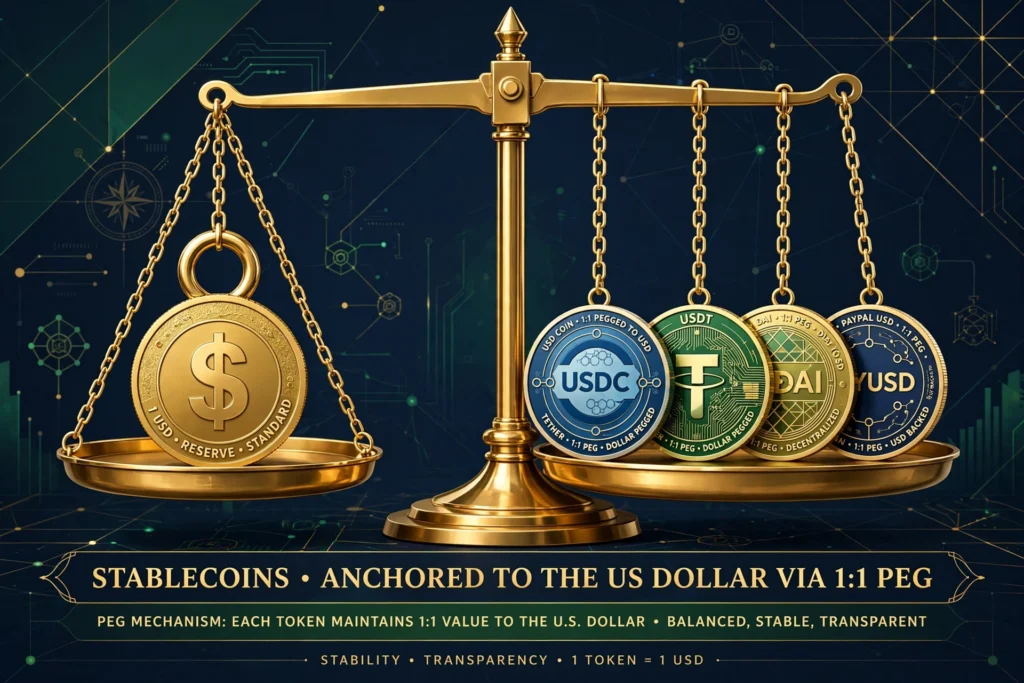
A stablecoin is a cryptocurrency designed to hold a steady value, almost always pegged 1:1 to the US dollar. One USDT or one USDC is meant to always be worth one dollar. They live on blockchains, move in minutes, and settle 24/7 — unlike bank wires.
The three models
Fiat-backed. The dominant model. An issuer holds dollars (or Treasuries and cash equivalents) in reserve and mints one token per dollar deposited. USDT (Tether) and USDC (Circle) work this way. Redeem the token, get the dollar back. Trust depends entirely on the quality and transparency of the reserves.
Crypto-backed. Tokens like DAI are backed by other cryptocurrencies locked in smart contracts, over-collateralized to absorb volatility. No bank account needed — but the system must liquidate collateral automatically when markets crash.
Algorithmic. The failed experiment. These tried to hold the peg with code alone, expanding and contracting supply. Terra’s UST collapse in 2022 wiped out tens of billions and taught the industry that unbacked pegs don’t survive stress.
Where they’re actually used
- Trading. The base pair for most crypto markets; traders park profits in stablecoins instead of cashing out to banks.
- Remittances and payments. Dollars that move across borders in minutes for fractions of a cent — huge in Latin America, Africa and Southeast Asia.
- Savings. In high-inflation economies, holding USDT on a phone beats watching local currency melt.
- DeFi. The collateral and lending asset of on-chain finance.
The risks nobody should ignore
Depeg risk. Even big stablecoins can wobble. USDC briefly traded below $0.90 during the 2023 US banking stress. Pegs are promises, not physics.
Issuer risk. You’re trusting a company and its reserves. Read the attestations — or at least know they exist.
Regulatory risk. Rules are tightening worldwide (Europe’s MiCA being the template). Non-compliant tokens are already being delisted from EU exchanges.
Smart-contract risk. For crypto-backed models, bugs in the code can break the backing mechanism.
The bottom line
Stablecoins are crypto’s most successful product by actual usage. Understanding the backing model behind each token is the difference between using digital dollars wisely and learning about reserve risk the hard way.
Source: MM Crypto Analysis Web (original analysis)